M I T O C H O N D R I A Part 1
WHAT ARE THEY?
HUMAN’S ENERGY METABOLISM AND MITOCHONDRIA
Ever since my medical school years, I have been wondering how every organ in our body works 7/24, how and from where do they get the required energy, and what happens to often toxic energy metabolism waste products?
My curiosity and inquiries finally brought me to the cellular level at mitochondria. I was pleasantly surprised to learn many new aspects of mitochondria that I didn’t know before
First, the mitochondrial DNA (mtDNA) is completely different, and acts independently than human’s DNA. It contains only 37 genes, whereas humans DNA contains over 20,000 genes. Mitochondrial DNA resembles more like bacterial DNA than a human’s DNA.
Scientists postulated that (mtDNA) was acquired in ancient times from an ancient bacterium when the bacteria were engulfed by larger ancestral single cell organism. Instead of digesting it, the ancestral host cells let the bacteria live inside of it to provide some help with energy production host cells lack.
This symbiotic living allowed cells to cooperate to live together thus enabling more complex and multicellular organisms to develop and evolve.
Scientific studies done on ancient fossils of antiquity have shown that multicellular organisms developed approximately 1.5 billion years ago.
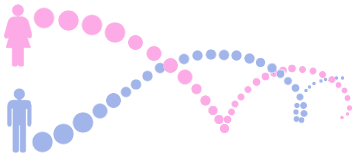
The other interesting aspect of mitochondrial DNA is that it can only be inherited through the mother’s egg and X chromosome. Fathers do not carry mitochondrial genes. Therefore, mothers are genetically far superior to fathers. Without mother’s eggs, energy for life would not be possible.
Mitochondria are intracellular organelles of nano batteries that produce the required energy by using nutrients we consume, as fuel for energy production. Mitochondria exist in every cell in our body, by the hundreds.
Our body is composed of around 37 trillion cells. So, the enormity of the mitochondria, the amount of energy they produce, and the number of toxic waste-products of energy metabolism also becomes enormous.
What does our body do to prevent the accumulation of toxic waste products of energy metabolism in its organs, becomes an utmost important question to ask.
As I see it, evolution intelligently designed our body to get rid of toxic waste products with the cooperation of multiple organs. Among these organs, the liver, lung, kidneys, and gastrointestinal organs take the lead. The liver is the biochemical laboratory of our body. The liver detoxifies many harmful waste products by chemical reactions and excretes some of them through the bile into the intestinal tract to be expelled by fecal material. Liver converts ammonia, the byproduct of protein metabolism, into urea to be filtered and excreted by urine.
Kidneys filter blood to remove many other waste products; electrolytes balance in the blood and regulate.
Lungs inhale O2 from the air and exhale CO2, the waste product of cellular respiration.
Gastrointestinal tracts expel copious amounts of waste products, undigested food, and various microorganisms through the stool.
Additionally, the skin eliminates some waste products through perspiration.
We handle all these human energy metabolism waste products very carefully. By strict rules and regulations, municipal services to prevent environmental pollution, diseases, and any other calamities. But we do not apply the same strict rules and regulations to giant fossil fuel companies who produce industrial energy on worldwide basis. They are free to use dirty fossil fuel for energy production, instead of renewable clean energy sources. To pollute our living environment, to cause catastrophic climate warming, loss of human life and properties because of politics, greed, and thirst of profit involved.
In upcoming part 2. of this article we will discuss the energy production and other vital functions of mitochondria for life.