IS TALENT A DIFFERENT FORM OF INTELLIGENCE OR A SPECIFIC NON-DECLERATIVE GENETIC GIFT?
Professor Howard Gardner, in his book Frames of Mind, the Theory of Multiple Intelligences states that “all human beings possess not just a single general intelligence but a set of relatively autonomous faculties (8 to 9 of them) multiple intelligences.” Instead of calling these autonomous faculties talents. In addition, these relatively independent, innate capacities are non-declarative and cannot be added up in a single number, as wrongly assumed by the Stanford–Binet IQ test.
Even though the theory of multiple intelligences emphasizes the uniqueness and complexity of the individual, it somewhat confuses me. As I see and understand it, intelligence and talent are not necessarily the same thing. I think, if we try to define them, maybe we would be able to see the differences between them more clearly.
To me, intelligence is a complex mental capacity that involves the combination of critical thinking, understanding, easy learning and reasoning to acquire knowledge, from many different physical and mental activities such as seeing, hearing, reading, studying, doing, and personal experiences, and retaining all these knowledge in memory, recalling them on demand, to use and to decide accordingly, what to do for problems that are faced in our daily life. Additionally, this type of knowledge that is acquired by these means is declarative and can be recalled, explained, and taught to others.
On the other hand, talent is different; it can be defined as an innate, spontaneous ability to do things without prior learning or thinking. There is no talent-generated knowledge in the memory; nothing related to talent can be recalled, because it is non-declarative, and taught to anybody else.
I know from personal experience what talent is. I used to be very good at doing ERCP, cannulating the biliary and pancreatic ducts. ERCP is one of the most difficult endoscopic procedures in gastrointestinal endoscopy. My colleagues used to ask me, “How do I do it? What is the secret?” I used to say, “I do not know, I just do it. It comes to me naturally.”
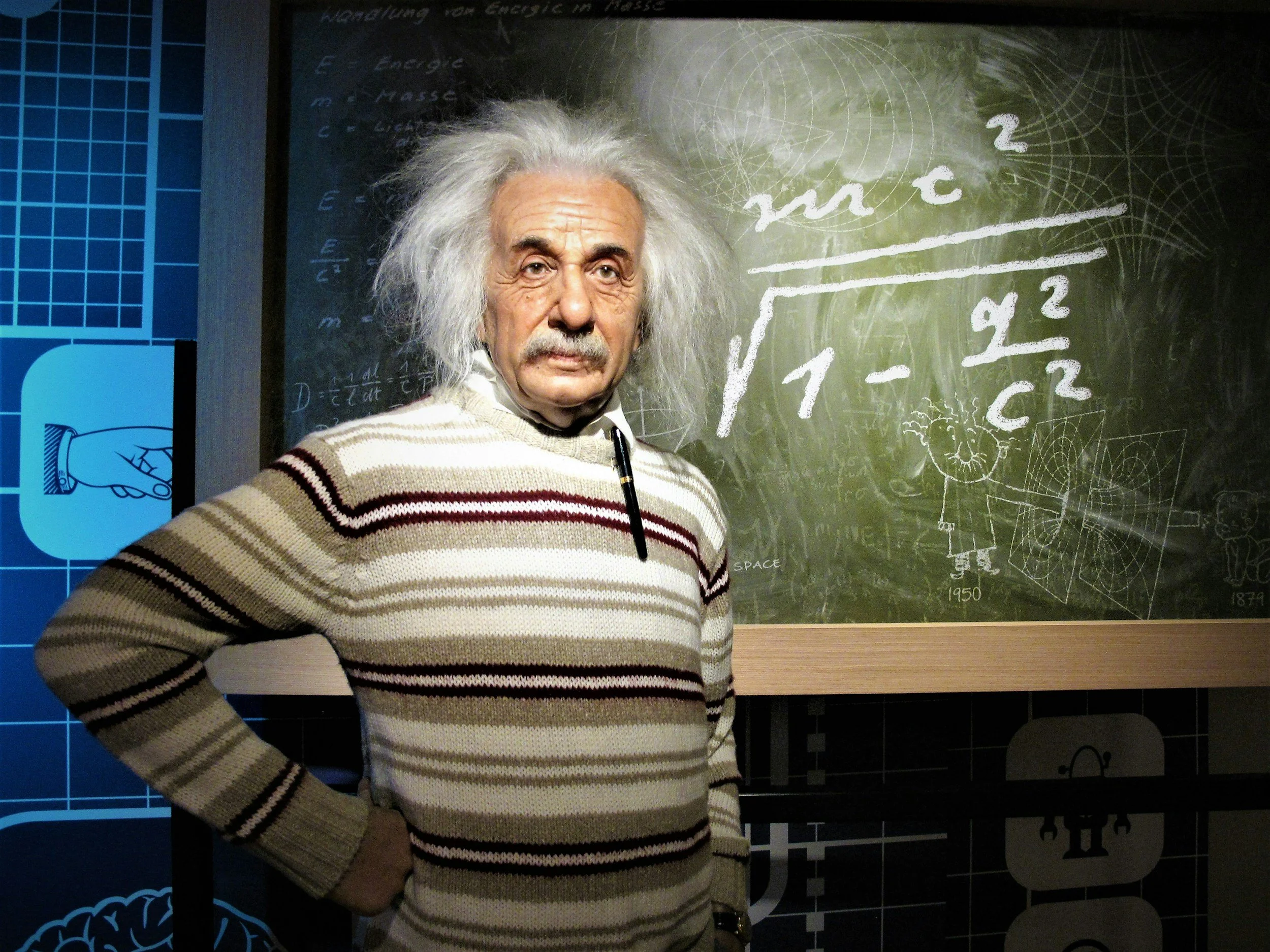
On rare occasions, a person could be blessed with high intelligence and extraordinary talent interconnected and in combination. This creates a genius, or a rare” superstar” in various fields of talent.
Human history is full of many of these geniuses. My favorite classical music composer is Ludwig van Beethoven (1770 -1827). He translated the feelings into music. Some of his greatest works were composed while he was going deaf.
However, sometimes, as seen in Savant Syndrome, which is a rare congenital mental/psychological disorder, an exceptional level of talent could be seen in people with a low level of intelligence or a very low IQ level. This means that exceptional talent alone cannot compensate for a low level of intelligence.